
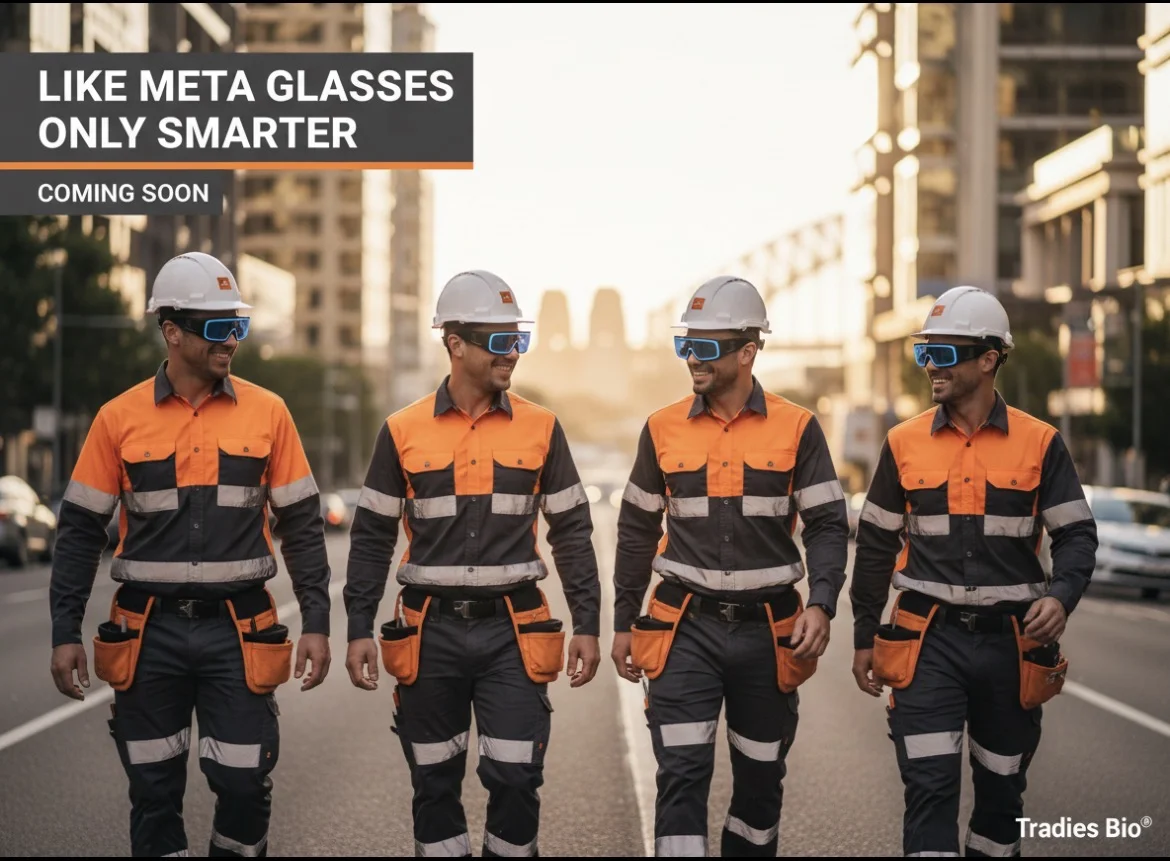
AI Wearables Are Coming to Work: Smart Glasses, Wireless Earbuds, and What Business Owners Must Do Now
AI is moving off the laptop and into the real world.
Not “one day.” Now.
Smart glasses. Wireless earbuds. Voice assistants that can listen, transcribe, summarise, and draft messages while you’re still on the tools, in the ute, or walking a site.
This is the next wave of business control: business owners directing their business by voice.
But there’s a catch.
AI wearables can also record, capture, and store information in ways people don’t notice — which means the businesses that win won’t just be the ones who buy the gear first.
The winners will be the ones who set the rules, train properly, and keep humans in the loop.
AI drafts. Tradie approves.
You run the show. Your AI is only your assistant.
What’s coming (and why it matters)
AI wearables are becoming normal fast because they remove friction:
- Less screen time (no more stopping work to type)
- Faster admin (notes, follow-ups, reminders, drafts)
- Better proof (photos, job notes, timestamped records)
- More consistency (checklists, compliance steps, repeatable workflows)
For tradies and small business owners, this is a big deal because admin is the silent killer:
- quotes that don’t get sent
- invoices that don’t get chased
- job notes that disappear
- compliance that gets rushed at night
- proof that’s missing when a dispute hits
Wearables can help fix that — if they’re deployed properly.
The reality: there’s no “AI wearables law” that will save you
Right now, there’s no single piece of legislation that directly regulates AI-powered wearables in the workplace.
Instead, a patchwork of existing obligations can apply, including:
- privacy and surveillance expectations
- work health and safety
- employment and contractor arrangements
- confidentiality and intellectual property
- discrimination and accessibility considerations
Translation: the tech is already here, and the responsibility already exists.
So the smart move is to act early — set clear parameters now — rather than waiting for an incident.
The two big risks (and why they’re avoidable)
1) Trust risk
Clients, staff, contractors, and the public will ask (or think):
- “Are you recording me?”
- “Where is that going?”
- “Who can hear that?”
2) Business risk
Wearables can accidentally capture:
- client addresses and private details
- access codes, security systems, alarm panels
- plans, screens, documents, quotes
- commercial conversations
Most problems won’t come from bad intent — they’ll come from “we didn’t realise it was saving that.”
What business owners should do now (simple, practical policies)
Whether the device is company-issued or personally owned, every business should set clear rules around AI wearables.
1) No-recording zones
Designate areas and situations where recording/transcription must be disabled or the device removed.
- bathrooms / change rooms
- private client discussions
- any meeting where confidential information is discussed
- any setting where people have a heightened expectation of privacy
Tip: If you have an office, workshop, or shared facility, use simple signage at entry points.
2) Disclosure and consent
If a wearable can record or transcribe, people deserve to know.
- disclose it before use (start of meeting, start of call, start of site chat)
- get consent from anyone who may be captured
- if consent is refused: disable the function or don’t use the device in that moment
This applies in-person and in remote/hybrid settings too.
3) Confidentiality and IP protection
Set a clear rule: don’t record what you don’t own.
That includes client details, restricted areas, screens, documents, prototypes, and commercially sensitive conversations.
If something is captured accidentally, the policy should require it to be deleted immediately and not uploaded or shared.
4) Data and cyber security
Every business should know:
- where wearable-captured data is stored
- who can access it
- how long it’s kept
- how it’s deleted
- whether it’s processed or stored offshore
This is where many small businesses get caught — not because they’re careless, but because nobody explained it properly.
The Tradies Bio® position: wearables will become normal — like safety gear
Your phone is already a power tool. But it still pulls you off the job: dirty hands, gloves, glare, interruptions.
Wearables bring the admin closer to the work:
- Wireless earbuds for voice-first admin and quick confirmations
- Smart glasses for job notes, checklists, proof photos, guided steps (without looking bulky)
And the direction is clear: business owners will direct their business by voice.
Why Tradies Bio® includes installation, teaching, and human support
AI doesn’t replace the tradie.
And it doesn’t replace the teacher either.
To get real results, you need:
- Installation (set up properly for your business)
- Teaching/coaching (so it gets used under pressure, on-site)
- Ongoing human support (because your business changes week to week)
AI drafts. Tradie approves.
You run the show. Your AI is only your assistant.
Less admin. More home time. Get your life back.
When the ute gets home and the keys come out — it’s family time.
Next step
If you’re a licensed tradie with an active ABN, Tradies Bio® helps you install and run an AI Personal Assistant the right way — practical, voice-first, and built for real work.
Building your business is our business.